


Plan Bay Area 2050+ Sets Regional Priorities
Plan Bay Area 2050+ Sets Regional Priorities
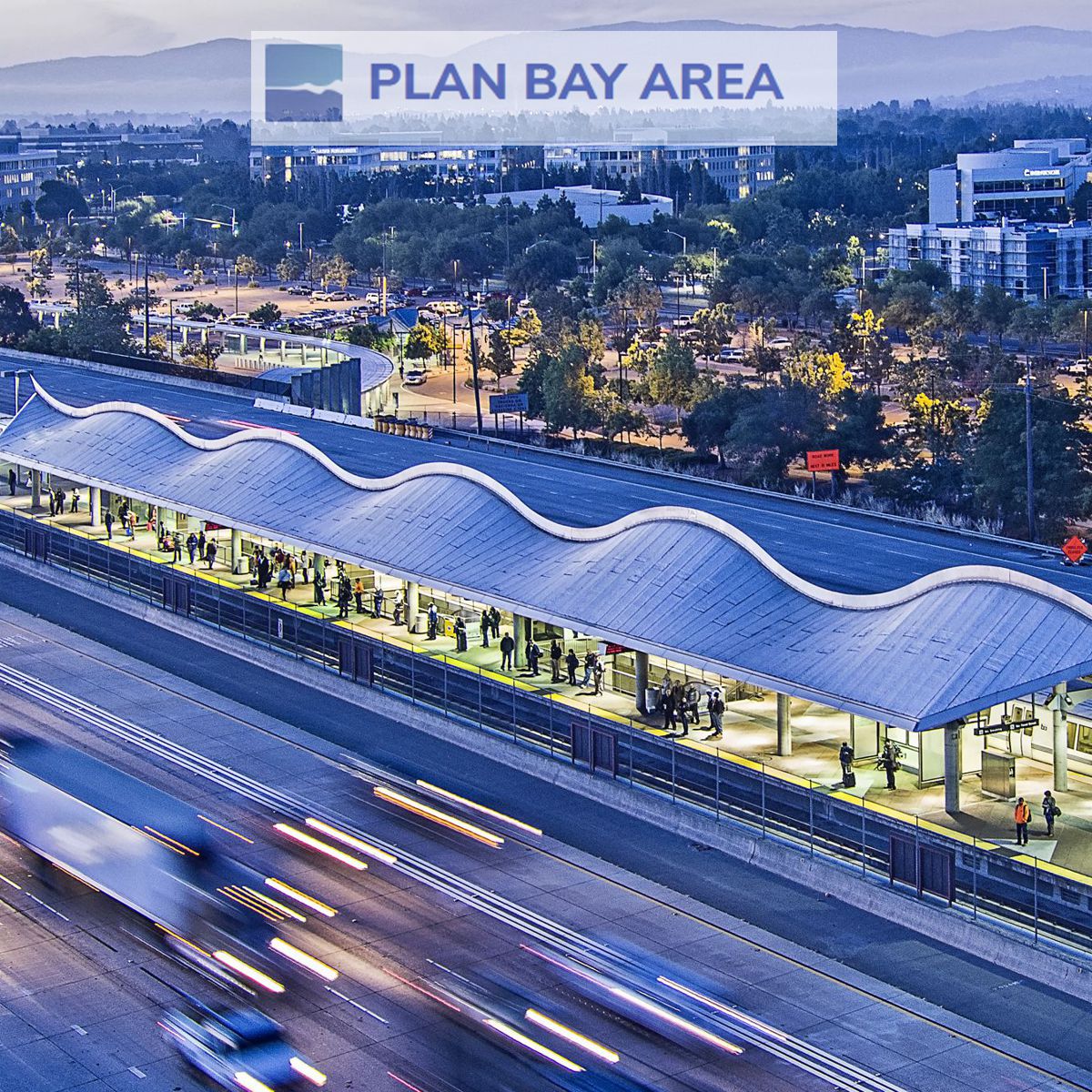
Earlier this year, the Metropolitan Transportation Commission (MTC) adopted Plan Bay Area 2050+ and certified the plan’s associated Environmental Impact Report, giving final approval to the Bay Area’s long-range plan for transportation, housing, economic resiliency, and environmental sustainability. It was also adopted unanimously by the Association of Bay Area Governments’ (ABAG) Executive Board. As agency officials note, the votes by both boards capped a nearly three-year process during which over 17,600 Bay Area residents, community organizations, advocacy groups, and public sector partners contributed to the development of the new plan, which MTC and ABAG are required to develop jointly.
By law, every four years MTC and ABAG must work together to adopt a long-range regional plan that serves as the Bay Area’s federally mandated Regional Transportation Plan and state mandated Sustainable Communities Strategy. The plan helps Bay Area agencies prioritize public policies and investments intended to make the nine-county region more affordable, connected, diverse, healthy, and economically vibrant for all residents.
A Framework for Improvement
The most recent plan recommends 35 strategies for transportation, housing, the economy, and the environment. It also features a major focus on climate change, and includes strategies for protection from hazards such as sea level rise and wildfires. Plan Bay Area 2050+ and its earlier incarnations represent aspirational visions for the future, according to Chirag Rabari, project manager for Plan Bay Area 2050+ and Assistant Director of Major Plans at MTC and ABAG.
“The best way to think about Plan Bay Area 2050+ is that it is a long term vision and framework for addressing the Bay Area's most pressing challenges, such as housing affordability, equitable economic growth, transportation access, and environmental resilience,” says Rabari. “It is not a series of mandates. It is not proposed legislation. It is not a set of funding allocations. It's really a framework for the region's future with the idea that what we want to be in 2050 is a more connected, more prosperous, more climate resilient Bay Area.”
To that end, the plan addresses issues that affect daily life for Bay Area residents. Its goals include reducing housing and transportation costs, expanding access to frequent transit, and providing access to many different modes of travel. Additional goals by 2050 include a 30% increase in the rate of homeownership among low-income households, a 25% increase per capita in publicly accessible acres of open space, and a 60% per-capita increase in the Bay Area’s gross regional product, in addition to specific measures to improve the environment and air quality.
Plan Bay Area 2050+, like earlier plans, is built on where the region is now and where it could be in several years, based on input from a variety of bodies. They include business organizations, labor groups, nonprofits, regional and city officials, and residents. The process of creating a new plan for a more sustainable and prosperous future includes identifying shared goals among these stakeholders. Plan Bay Area 2050+ was developed in a nearly three-year process. Over 17,600 Bay Area residents, community organizations, advocacy groups, and public sector partners contributed to the development of the new plan, according to agency officials.
“We try to use our funding programs and other tools that are available to us in our capacity as a metropolitan planning organization to incentivize changes that are consistent with the long range plan,” notes Rabari. “The plan sets the vision, and then we try to use policy tools and incentives to help guide our partners, jurisdictions, and other agencies towards this future.”
“Making Plan Bay Area 2050+ a reality is a shared effort,” according to agency officials. “At the local level, this work is led by local governments and other partner agencies.” To make that work easier, MTC and ABAG have developed a Partner Resources webpage with tools that help their partners develop local plans, seek funding, and take action to make a better Bay Area. That webpage is available to the public and contains information many businesses and nonprofit organizations would find useful as well. Another important resource is Vital Signs, an interactive website by MTC-ABAG that “offers data, visualizations, and contextualized narratives on important trends in the SF Bay Area related to land use, transportation, the environment, the economy, and equity,” officials say.
Collaboration Matters
Among its many recommendations, Plan Bay Area 2050+ suggests that the region’s agencies collaborate to find funding to turn several pilot projects into ongoing initiatives. Those projects include the Clipper START program, the Clipper Bay Pass, and the Regional Mapping and Wayfinding project. Clipper START is an income-based program that provides single-ride discounts. Participants save 50% on all Bay Area public transit systems. The Clipper BayPass pilot program gave a group of test users unlimited access to all bus, rail, and ferry services in the nine-county region to measure how an all-system pass could impact travel in the Bay Area. The Regional Mapping and Wayfinding Project is working to make it easier to ride transit in the Bay Area by making wayfinding materials such as maps, signs, and screens more consistent and easier to identify. The project is being led by MTC as part of a partnership of transit riders, Bay Area cities and counties, and all two dozen Bay Area transit agencies.
After a plan is approved and some time has passed, agency officials report to elected officials on their progress on any action commitments made in the implementation part of the plan. In June 2026, for example, Rabari estimated that up to 80% of the action commitments in the previous long-range plan had been completed. The first progress report on Plan Bay Area 2050+ is expected in the first half of 2027.
In addition to working to complete action commitments made in each approved plan, agency officials also start crafting the next plan almost immediately. “We anticipate kicking off our next plan, Plan Bay Area 2060, later this year. So we would highly encourage folks to visit our website and sign up for the mailing list.”
“Planning is a critical first step to all the implementation work that we do as a region and at the local level as well,” according to Dave Vautin, Director of Regional Planning at MTC-ABAG. “We believe that this continues to serve as a solid foundation to build upon and implement. If we keep leaning in on opening up opportunities for housing in the right places, we can create better communities for the next generation. We have real fiscal constraints going forward, and infrastructure projects are incredibly expensive. We need to get smarter. This plan underscores that the things that cost millions, not billions are going to be especially key.”
Sue Noack, Chair of the MTC’s Regional Network Management Committee and Pleasant Hill City Council member agrees that Plan Bay Area 2050+ is important. “You don’t want to plan for transportation without considering housing or considering resilience. This plan allows you to think about all those things in an integrated fashion.”
There is no guarantee that the region will reach the outcomes outlined in Plan Bay Area 2050+. But striving for a better future is not only legally mandated but also an effective approach. Between 2018 and 2023, for example, an estimated two thirds of all of the new homes in the Bay Area were built in Priority Development Areas, according to Rabari. Caltrain has been electrified. BART has expanded. The East Bay’s Bus Rapid Transit network, called AC Transit Tempo Line 1T, was introduced. The ferry system was also expanded.
“Looking at the past 15 years, you can see that we have been protecting our environment,” Rabari notes. “We have focused housing growth in the places that we want to emphasize. And we are delivering transportation capital projects. Of course there are a lot of things that we need to do better. But our hope is that we can see where we've had success and try to build on those successes through partnership with local agencies across the region to keep delivering for the people of the Bay Area.”
For more information about Plan Bay Area 2050+, please visit www.planbayarea.org.
For more information about Partner Resources for planning, please visit www.planbayarea.org/technical-resources/plan-bay-area-2050-plus/partner-resources.
To access the interactive data and visualization website Vital Signs from the Metropolitan Transportation Commission and the Association of Bay Area Governments, please visit www.vitalsigns.mtc.ca.gov.
For more information about the Metropolitan Transportation Commission, please visit www.mtc.ca.gov.
For more information about the Association of Bay Area Governments, please visit abag.ca.gov.