


Tri-Valley Features Wealth of Museums
Tri-Valley Features Wealth of Museums
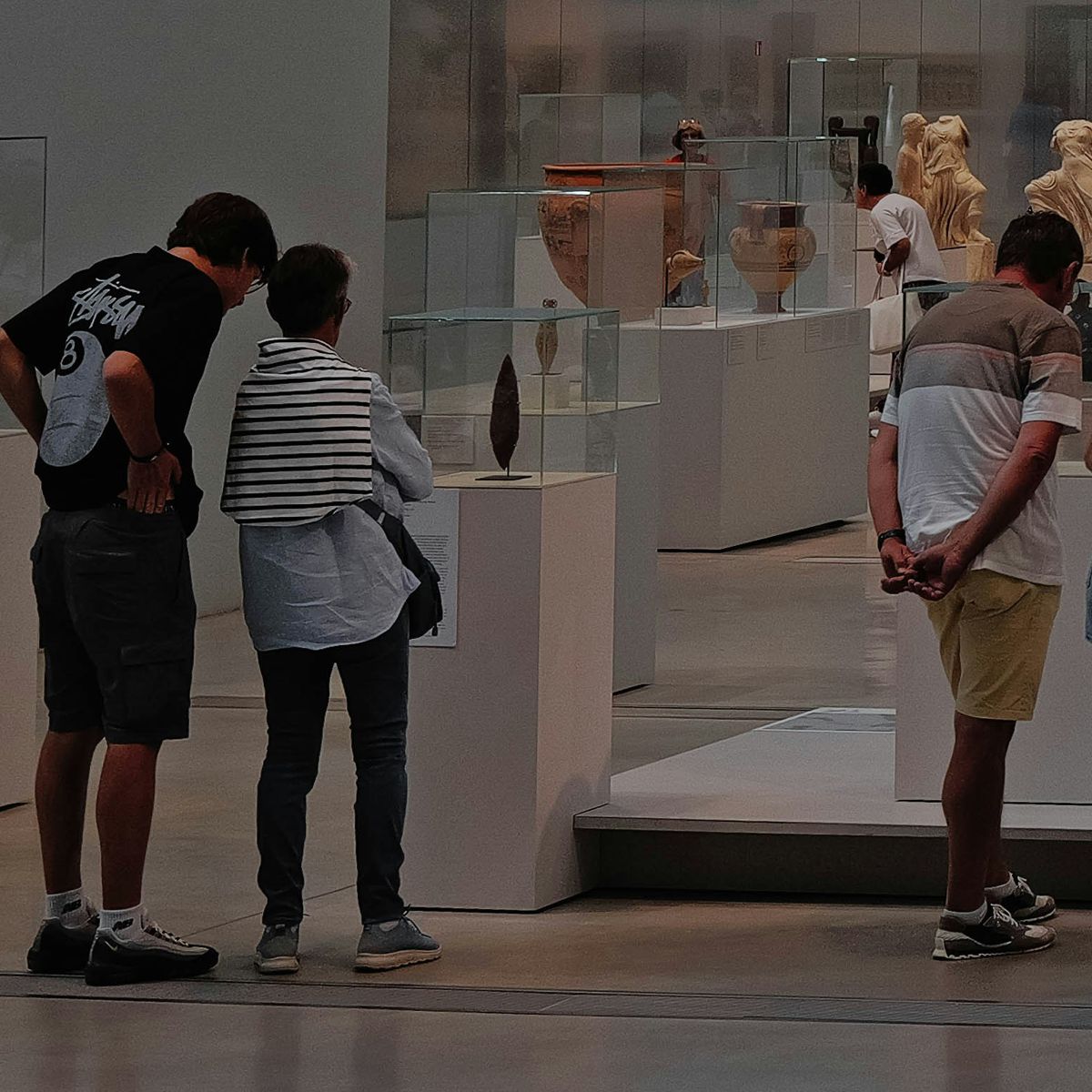
On February 5, 1850, The San Francisco Daily Alta California newspaper reported with great excitement regarding a legal matter on the East Coast. “We cannot conceal our satisfaction at the fact stated in the annexed paragraph, which we find in one of our exchanges,” the article noted. “The manager of the Troy (N. Y.) Museum, has brought an action against a clergyman for libel, and laid his damages at $10,000. It appears that the clergyman, in a pulpit discourse, pronounced the museum a vile, immoral pit–its performance evil in its influence, and dangerous to the moral welfare of the community. Two-thirds of his congregation, it is said, were in the habit of visiting it.”
No vile or immoral enterprises can be found at Tri-Valley museums. Visitors can find, however, many opportunities to enjoy local collections and historic sites as well as engaging and educational experiences within the region.
Famous Museums and Hidden Gems
Danville’s notable museums include Blackhawk, the Museum of the San Ramon Valley, and the former home of Eugene O’Neill. Blackhawk may be the best-known museum in the Tri-Valley thanks to its collection of historically significant automobiles. They range from the earliest gas-powered auto to a 1935 Duesenberg to a contemporary 2017 Lamborghini Centenario. Blackhawk Museum was recognized as the Best Museum in the East Bay in the 2026 East Bay Times Best in the East Bay awards. In addition to the Don William's Automobile Gallery, the museum also offers visitors five other exhibit areas: The Spirit of the Old West, Art of Africa, Pat's Compacts, Into China, and World of Nature. The museum’s ongoing Changemaker Speaker Series puts exceptional speakers on stage “to share their pioneering insights and experiences.” Other speakers and events also take place regularly. On Saturday, August 29, for example, automotive historian and author Jay Gillotti, Historian for the Porsche Club of America, will offer two engaging presentations exploring Porsche’s rich history, legendary engineering, and racing heritage.
The Museum of the San Ramon Valley in Danville celebrates the city’s rich history and heritage through a permanent exhibit. It includes local artifacts, an historical narrative frieze, and pictures of historic buildings related to the San Ramon Valley. From June 20 to August 23, 2026 visitors can enjoy the exhibit called Totally Trains Running Through The Depot, a popular summer program for families with young children. This year’s theme is Trains and the Postal Service. Children will be able to sort mail and packages just as the mailmen did in the past on the trains. The exhibit includes a large collection of Plasticville buildings, and model trains of the past. The Family Pass allows visitors to visit the trains multiple times over the summer. The museum also sponsors revolving exhibits and several guided walking tours. Its virtual programs allow visitors to register to hear speakers on a variety of topics and to listen to the presentations after they have taken place. They include Montevideo: Skateboarding History in the San Ramon Valley.
The National Parks Service protects the Danville home of Eugene O’Neill, the only American playwright to receive a Nobel Prize for Literature, as a historic site. “The home itself, named the Tao House, contains several of the playwright’s personal possessions and provides visitors an intimate perspective of the world-renowned artist’s life who chose the Tri-Valley as his home several decades ago,” officials note.
Every year during the Eugene O’Neill Festival held in September, his plays are brought back to life in the form of live performances housed in a small barn on the premises. The museum collection of Eugene O'Neill National Historic Site represents the playwright’s life and work from 1937 to 1944, the years he lived at Tao House. The collection includes personal belongings owned by the O'Neill family including clothing, accessories, and books, as well as original photographs and personal correspondence. Moreover, “the park grounds feature beautiful landscapes with winding trails, lush gardens, and picturesque views of the San Ramon Valley.”
At Dublin Camp Parks Military History Center and Dublin Heritage Park & Museums, visitors can explore the period more than 200 years ago when “Dublin served as the crossroads of two important stage coach routes, one from the Bay Area to Stockton and the other from Martinez to San Jose,” according to Dublin city officials. Dublin Camp Parks Military History Center features permanent museum-quality exhibits and rotating temporary exhibits, as well as history activities several times a year. The current exhibit explores the heartfelt communications of soldiers during wartime with a special focus on V-Mail. The center is a partnership between the City of Dublin and Parks Reserve Forces Training Area.
Dublin Heritage Park & Museums is a 10-acre park that features historic buildings, lawns, picnic areas, and a pioneer cemetery. One notable building is the Kolb House Historic Home Museum, a 1911 craftsman bungalow owned by George Kolb, who came to Dublin from Germany in 1880 and soon after bought Dublin's General Store. The home features original period-style rooms with the family's own Mission and Arts and Crafts furniture, family photographs, and many personal items. Another museum there is the 1856 Murray Schoolhouse, which “traces the journey of Dublin's founders from Ireland to America in 1834, across the plains in a wagon train, and arriving in Mexican California in 1846,” according to museum officials. The Schoolhouse features interactive exhibits including a playhouse for preschool-age children.
More Treasures to Explore
The Discovery Center at Lawrence Livermore National Laboratory (LLNL) provides in-person and virtual visitors with a window into the lab’s science and technology. LLNL officials say the exhibits “are designed to excite the next generation of researchers about new innovations and the work that we do.” In-person visitors can “step inside a replica of the National Ignition Facility target chamber to find out how we use the world’s most energetic laser to understand extreme conditions.” Remote visitors can also learn about the lab’s state-of-the-art research programs with its Virtual Discovery Center. “The Virtual Discovery Center showcases exciting scientific discoveries from around the Laboratory with links to videos, educational resources, and fun facts typically shared while visiting the center,” according to officials. “Visitors can meet the wildlife that reside on-site, learn about the Laboratory’s research in space or download a comic book that takes readers inside the National Ignition Facility, the world’s most energetic laser.”
The Quest Science Center, which is working toward building a permanent home, offers visitors a 5,000-square-foot outdoor science exploration and community space at Quest Plaza, located in Livermore at Stockmen’s Park. Science@Stockmen’s Park is “a free monthly outdoor event for children ages three and up, teens, and adults. From May through October, Quest offers fun science activities, stage shows, music, and more,” Quest officials note.
Pleasanton’s Museum on Main describes its mission as "Enriching Community Life Through Education and Preservation" by way of a variety of programs. The building itself has been used as the Town Hall, the local Police Department, and the first free library in the city. Since 1963, the Amador-Livermore Valley Historical Society has used the building to protect, preserve, and interpret the history of the two valleys. Its most recent exhibit, Wicket Crazy: Cricket and the Tri-Valley, runs through September 5, 2026. Wondering what the wicket-keeper does during a cricket match? Find out at this exhibit, which explores the game of cricket and its journey from England to India to the Bay Area. An interactive cricket pitch helps visitors experience aspects of the game. Museum on Main also hosts resources and exhibits on Pleasanton history, a speaker series, and other events.
Finally, the Alviso Adobe Community Park, located in Pleasanton, is a seven-acre historical site built around an 1854 adobe house built by Francisco Alviso. This rare surviving example of an early American adobe was continuously in use until 1969, but it is not the only thing of interest at the park. “This fully restored interpretative park reveals the history of the Amador Valley, offering a rare glimpse of times past–from its Native American beginnings to the days of Spanish Ranchos managing herds of cattle on the original 12,000 acre Rancho Santa Rita, through a period in the early to mid-20th century when it was a popular dairy and finally its present as a community park,” according to Pleasanton officials. Activities include visiting the park’s resident fiberglass educational milking cow, Fiona, and trying to milk it, practicing lassoing skills on the park’s wooden cows, and learning about local animal paw prints from a kinetic sand installation.
Many of the museums and historic sites listed above offer online resources to delight those who cannot visit in person. The Tri-Valley offers a rich history and a promising future. It is easy to learn about both through the region’s wonderful museums. The list above is but a sample of the many educational resources in the region well worth exploring.
For more information about Blackhawk Museum, please visit www.blackhawkmuseum.org.
For more information about The Museum of the San Ramon Valley, please visit www.museumsrv.org.
For more information about the Eugene O'Neill National Historic Site, please visit www.nps.gov/euon/index.htm.
For more information about Dublin Camp Parks Military History Center, please visit www.dublin.ca.gov/1916/Dublin-Camp-Parks-Military-History-Cente.
For more information about Dublin Heritage Park & Museums, please visit www.dublin.ca.gov/269/Dublin-Heritage-Park-Museums.
For more information about the Lawrence Livermore National Laboratory Virtual Discovery Center, please visit www.virtual-discovery-center.llnl.gov.
For more information about Quest Science Center, please visit www.quest-science.org.
For more information about Museum on Main, please visit www.museumonmain.org.
For more information about Alviso Adobe Community Park, please visit www.cityofpleasantonca.gov/your-community/recreation/alviso-adobe.
Photo by Adrien Olichon on Unsplash